Global disruption of application and web access.
€1.5bn estimated financial-services impact
 SIEMENS Business Continuity Assessment - Business Case
 Loading…
Internal · Decision support
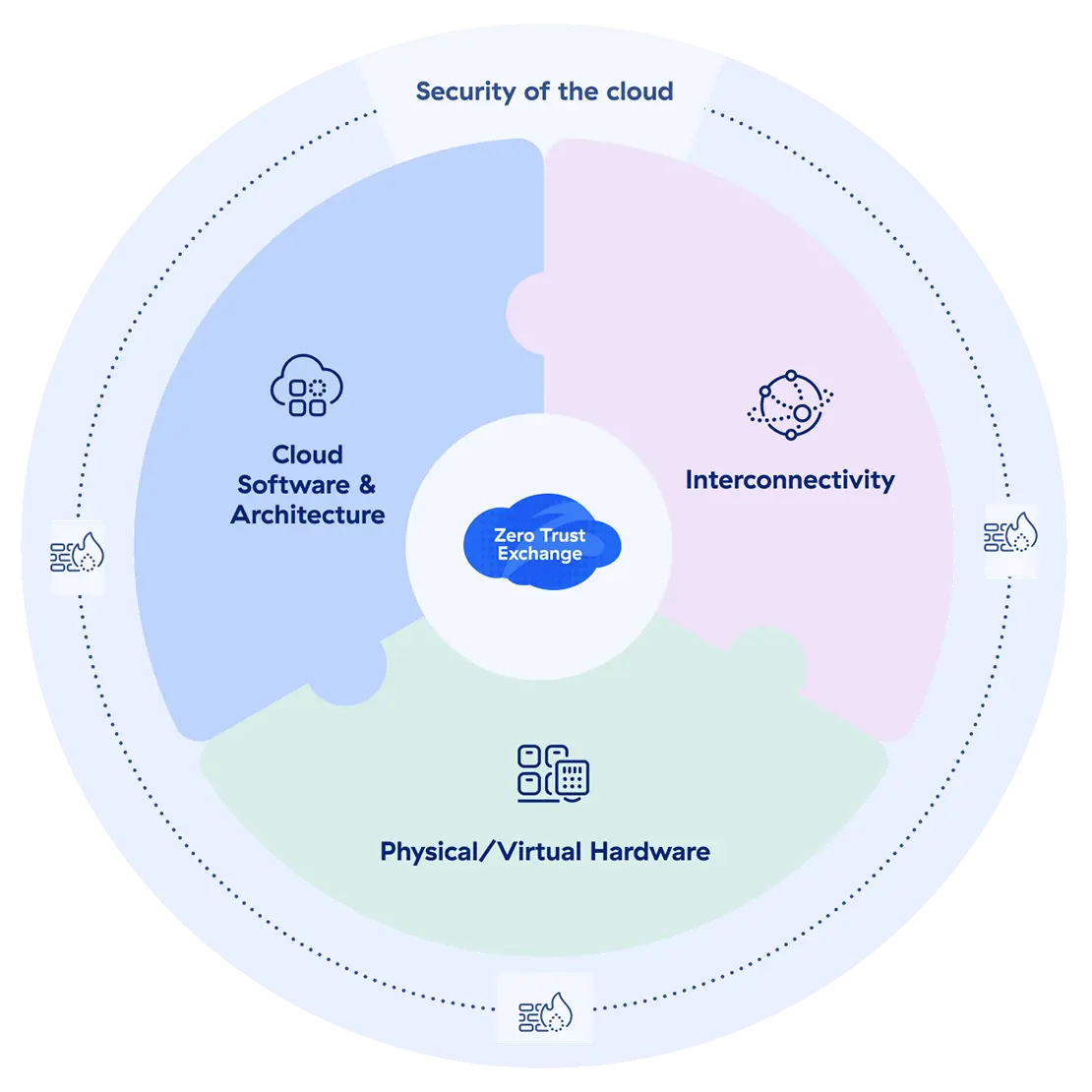
Siemens infrastructure is redundant. The access decision layer is not.
A single Zscaler control-plane failure puts up to
1 · Today
Around 80% of Siemens' workforce reaches private applications through Zscaler. Infrastructure is globally redundant — but the access decision layer is centralised.
Industry reality
Disruptions in centralised digital services have repeatedly impacted enterprise access and business operations. This is not theoretical.
Global disruption of application and web access.
€1.5bn estimated financial-services impact
Widespread system outages impacted business operations worldwide.
~8.5M users affected
Authentication disruptions prevented users from accessing enterprise applications.
109 reported incidents since May 2022
Database outage caused by parallel system updates uploading the same data.
€581M loss potential in a 15-hour outage
Compliance & DORA
BCC supports Siemens' obligations under DORA / GDPR / HIPAA / PCI DSS and NIST along the four pillars regulators measure. Each is reinforced by the same architectural change: removing the single decision dependency.
Globally distributed cloud with a 99.999% uptime target — the access decision layer becomes redundant, not a single dependency.
Real-time visibility into access failures and automated failover shortens mean time to detect, contain, and report.
Continuous access during disruption protects critical business processes from cascading impact.
Reduces residual reliance on a single vendor's control plane — fewer SLA breaches, less regulatory exposure.
4 · Build your case
Every assumption mirrors the BCC Excel. Edit any input to see the impact recompute in real time, save the scenario under a name you can recognise, and share the URL with colleagues.
The solution
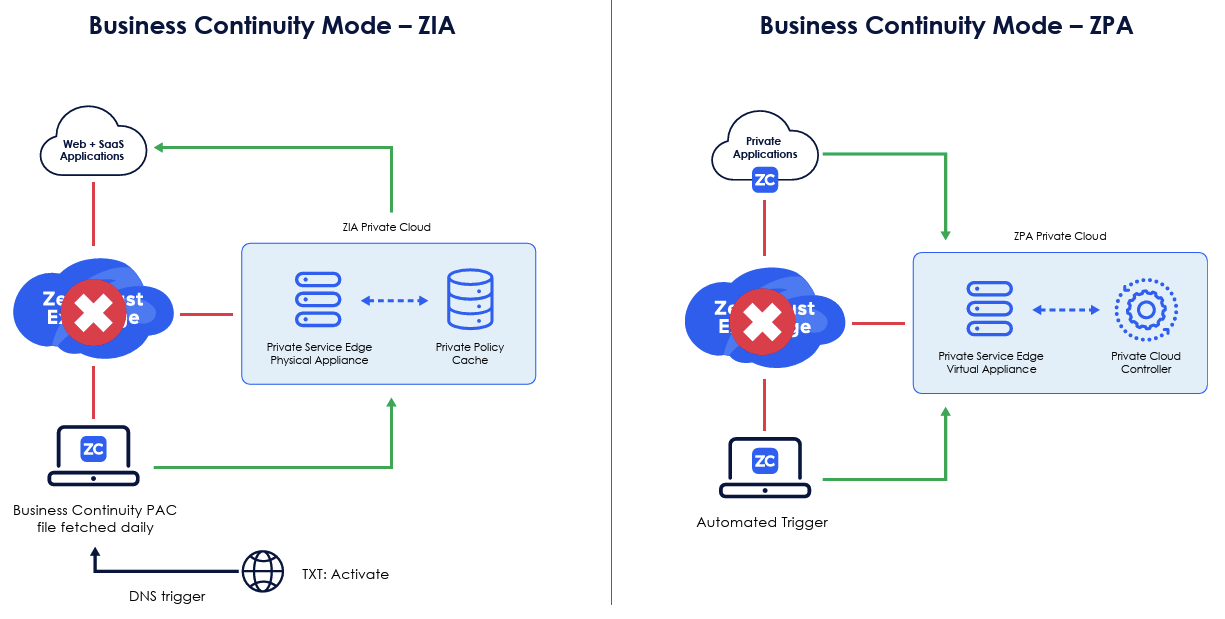
Access disruptions no longer cause business disruptions.
7 · Decision
7,2 M € / hour revenue impact, plus reputational damage and compliance exposure.
Revenue protection · productivity preservation · reduced IT effort · SLA & compliance penalty avoidance.
Appendix
Every value below is editable in the calculator. Defaults are sourced from the Siemens Annual Report 2025 and the Zscaler-supplied BCC business case calculator.
| Assumption | Default value | Source / Quelle |
|---|---|---|
| Annual revenue | 78.900.000.000 € | Siemens Annual Report 2025 |
| Zscaler user share | 80 % | ~250k of 318k employees have a Zscaler licence |
| Outage duration | 1 h | Executive lever — adjust to model worst-case duration |
| Average downtime penalty | 100.000 € / h | Industry estimate for downtime penalty exposure |
| Baseline availability | 99,9 % | Pre-ZBC service availability baseline |
| ZBC-enhanced availability | 99,98 % | Post-ZBC enhanced availability |
| Workforce affected | 100 % | Share of licensed workforce affected by outage |
| Employees with Zscaler licence | 250.000 | Siemens total employees with Zscaler licence |
| Avg cost / employee hour | 25 € | Conservative estimate for average Siemens employee cost/hour |
| ZBC productivity mitigation | 50 % | Conservative — employees retain ~50% productivity during failover |
| IT staff handling outage | 300 | IT staff dedicated to manual outage remediation |
| Days to mitigate manually | 7 d | Working days the team spends mitigating a major outage manually |
| Avg cost / IT employee hour | 90 € | Estimate for IT staff incl. leadership involvement |
| ZBC automated failover mitigation | 98 % | Automated failover removes ~98% of manual remediation effort |